Recording Legacy Videos With a Loved One Who Has Memory Loss
Prioritize comfort over completeness
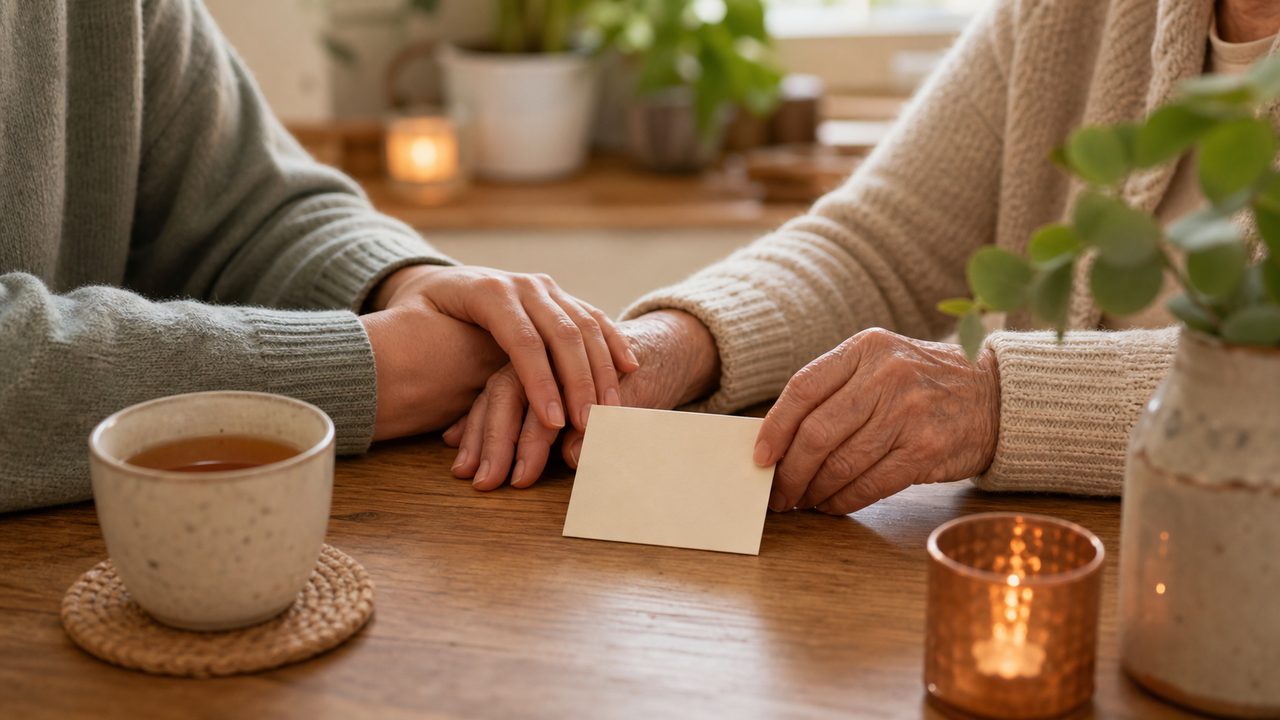
Memory loss changes what recording can be. The goal is not to extract a perfect biography. The goal is to preserve moments of voice, expression, affection, and identity.
Stop if the person becomes tired, distressed, confused, or uninterested.
Use familiar prompts
Photos, music, recipes, familiar rooms, and old objects can help stories surface. Ask gentle questions and accept whatever comes.
Do not correct every detail. Emotional truth may matter more than chronological precision in a family memory recording.
Be careful with consent and sharing
If capacity is uncertain, involve appropriate family decision-makers and follow medical, legal, and ethical guidance in your jurisdiction.
Private recordings of vulnerable people should be shared narrowly and respectfully.
Quick checklist
- Stop when tiredness appears.
- Use photos or songs as prompts.
- Avoid quizzing.
- Share recordings carefully.
Important: MyFinalMessage is for personal legacy messages and secure memory planning. It is not a substitute for legal, medical, financial, or mental health advice. Use qualified professionals and local official processes for those decisions.
Preserve Your Message With Care
Record a private video, choose recipients, and keep your legacy message protected until the right time.
Create Free Account →